Sheffield Wednesday Supporters’ Trust issues statement after James-Bord led takeover bid collapses

The proposed takeover of Sheffield Wednesday has suffered a major setback after the James Bord-led consortium officially withdrew from the process, plunging the club back into uncertainty at a critical juncture in its history.
Bord’s group had been granted ‘preferred bidder’ status on Christmas Eve, a development that at the time was viewed as a significant step toward ending months of instability. Following that decision, the consortium entered the English Football League’s rigorous owners’ and directors’ test, a mandatory vetting procedure designed to assess the suitability, financial capability and long-term intentions of prospective owners. The group had also been operating under a period of exclusivity, during which they were the only party permitted to negotiate a deal.
In a further sign of their apparent commitment, the consortium had been helping to cover the club’s mounting financial losses during that exclusive window. With Wednesday reported to be losing substantial sums each month while in administration, that financial support was crucial in keeping day-to-day operations running. For supporters desperate for stability, it seemed as though a resolution was finally within reach.
However, confirmation that Bord’s consortium has now stepped away from the deal has dramatically altered the situation. Their withdrawal effectively resets the process, meaning Wednesday are once again open to fresh bids. The club is back on the market, and administrators must now re-engage with alternative interested parties in a bid to secure a new owner as quickly as possible.
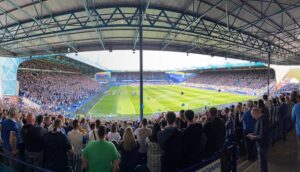
It is understood that former Newcastle United owner Mike Ashley remains attentive to developments, while the Storch family are also believed to retain an interest should the opportunity present itself. Whether either party moves swiftly remains to be seen, but the renewed availability of the club may reignite negotiations that had previously stalled.
The timing of this collapse could hardly be more damaging. Just days earlier, Wednesday’s relegation to League One had been confirmed, adding a sporting blow to the mounting off-field turmoil. Relegation not only reduces revenue streams through lower broadcasting income and sponsorship value, but it also complicates recruitment and retention plans. Without clarity over ownership, the club is unable to commit to contracts, define a budget, or map out a coherent strategy for the 2026/27 campaign.
This growing sense of drift has not gone unnoticed by supporters. On Wednesday afternoon, the Wednesday Supporters’ Trust issued a strongly worded statement responding to the news. The Trust acknowledged the consortium’s withdrawal and called on administrators and relevant regulators to move the process forward “as quickly as possible” to ensure a suitable new owner is installed before the start of next season.
Their concerns extend far beyond boardroom uncertainty. The Trust highlighted how the playing squad has been “decimated” over the past year, with departures, injuries and financial constraints leaving the team significantly weakened. A summer rebuild is not just desirable but essential if Wednesday are to mount a credible challenge in League One. That rebuild, supporters argue, cannot begin in earnest without ownership clarity.
The statement underlined what fans view as a minimum expectation: that the club should be capable of fielding a competitive side in the third tier. For a club with Wednesday’s proud history and passionate fanbase, simply surviving in League One would not be enough. The ambition must be to challenge near the top of the division and lay foundations for a return to the Championship. But ambition requires leadership, investment and decisive planning — all of which are currently in limbo.
Pre-season preparations are fast approaching, and the summer transfer window will not wait for ownership disputes to be resolved. Every week that passes without a deal in place reduces the time available for meaningful recruitment and strategic planning. In modern football, where preparation and long-term structure are often the difference between success and stagnation, that delay could have lasting consequences.
For now, Wednesday’s future hangs in the balance once again. Administrators face mounting pressure to secure a new buyer, supporters are demanding transparency and urgency, and the club’s competitive prospects remain uncertain. The coming weeks may prove pivotal — not just for next season, but for the long-term trajectory of one of English football’s historic institutions.











Post Comment