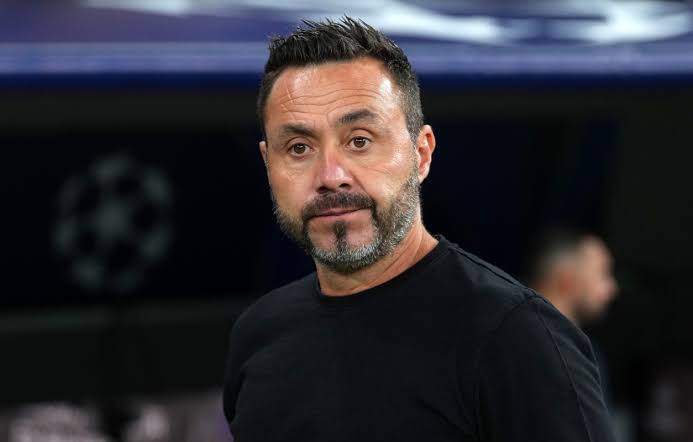
Man says sacking de zerbi will only destroy spur
The pressure surrounding Roberto De Zerbi at Tottenham Hotspur appears to have eased slightly following the club’s performance against Manchester United. Although Spurs could only manage a 1-1 draw against one of English football’s biggest clubs, their display offered several encouraging signs that suggest the Italian manager is beginning to make progress with his tactical approach.
Even former Manchester United defender Gary Neville and other football observers have had reasons to acknowledge the improvement in Tottenham’s performances. Despite their disappointing position in the Premier League standings, Spurs demonstrated that they can compete with established opponents when they execute De Zerbi’s footballing philosophy effectively.
Tottenham controlled large periods of the contest against Manchester United, showing greater confidence in possession and an improved ability to move the ball through the different areas of the pitch. Their passing, movement and positional play caused problems for United, with the home supporters reportedly expressing their frustration during the first half as Spurs enjoyed significant spells of possession.
For De Zerbi, performances like this could prove important as he attempts to establish his identity at Tottenham. The former Brighton & Hove Albion manager has built his reputation around an attacking style that prioritises possession, intelligent movement and playing through opposition pressure rather than simply clearing the ball forward.
However, despite the encouraging football Spurs have produced, their position in the Premier League remains deeply concerning. Tottenham are sitting 19th in the table, just one point above Fulham, and their inability to convert promising attacking situations into goals continues to undermine their progress.
Tottenham’s Biggest Problem Is Their Failure to Score Goals
While Tottenham have shown noticeable improvement in their build-up play, their attacking players have struggled to deliver the finishing required to turn good performances into victories.
The draw against Manchester United was another example of this frustrating pattern. Spurs created several opportunities to take control of the game but failed to make the most of their chances. Dominic Solanke was unable to convert some promising openings, while Mohammed Kudus also had opportunities that could have changed the outcome of the match.
Tottenham eventually found the equaliser in the 92nd minute, rescuing a point when it appeared that their efforts might once again end in disappointment. Although the late goal demonstrated their determination to keep fighting, the fact that they needed so long to score despite creating numerous opportunities highlighted a serious weakness in the team.
For a club battling near the bottom of the table, missed chances can have devastating consequences. Controlling possession and producing attractive football may impress supporters, but those qualities will count for very little if the team cannot consistently find the back of the net.
Spurs need their attacking players to become more clinical, particularly in matches where their tactical approach allows them to create openings against strong opposition. Solanke, Kudus and the rest of Tottenham’s forward line must take greater responsibility for converting chances if the club hopes to escape its current predicament.
The concern is that Tottenham’s performances are beginning to tell two different stories. Their football suggests a team capable of competing at a considerably higher level, but their results paint the picture of a side struggling to turn its potential into points.
De Zerbi’s Coaching Is Not the Main Problem at Tottenham
The Manchester United match also raised an important question about where Tottenham’s real difficulties lie. If De Zerbi eventually comes under serious pressure because of the club’s poor results, would it be fair to blame his coaching methods?
Based on the improvements visible in Tottenham’s performances, there is a strong argument that the Italian’s tactical ideas are not the primary problem.
De Zerbi has introduced a more structured approach to possession, encouraging his players to remain composed under pressure and move the ball with greater purpose. Tottenham have looked more comfortable progressing through midfield and creating attacking situations rather than relying entirely on individual moments of brilliance.
These improvements are particularly noticeable when compared with the different approaches used by previous managers Ange Postecoglou and Thomas Frank. Although their footballing philosophies differed significantly, De Zerbi has attempted to establish his own identity and make Tottenham more effective in possession.
The Italian’s methods require patience, technical quality and intelligent decision-making. Players must understand when to hold the ball, when to draw opponents out of position and when to accelerate an attack. When those movements work as intended, Tottenham can become difficult to contain.
The performance against Manchester United offered evidence that the players are beginning to understand those demands. Spurs were able to control the ball for extended periods and create opportunities, even if their finishing ultimately prevented them from securing all three points.
Nevertheless, tactical improvement alone cannot guarantee success. Football is ultimately decided by results, and De Zerbi must find a way to ensure that his team’s attractive performances translate into victories.
If Tottenham continue to dominate possession but remain unable to score, the manager will inevitably face questions about his ability to solve the problem. However, the club must also examine whether the players available to him possess the necessary qualities to deliver the results expected of them.
Roberto De Zerbi May Have Made Mistakes in the Transfer Market
Although De Zerbi deserves recognition for the improvements in Tottenham’s style of play, his decisions in the transfer market could become a major talking point if the club’s disappointing results continue.
The players brought into the squad are not necessarily poor footballers. Savinho offers attacking quality and creativity, while Mateus Fernandes has the potential to develop into an important midfielder. Jan Paul van Hecke, Omar Marmoush and Sandro Tonali also possess qualities that could make them valuable additions to a competitive squad.
Meanwhile, experienced free-agent signings such as Andy Robertson and Marcos Senesi could provide useful depth and experience, depending on how effectively they adapt to their roles within the team.
On paper, Tottenham’s recruitment appeared to offer several reasons for optimism. The club invested heavily in players who were expected to strengthen different areas of the squad and help De Zerbi implement his preferred style of football.
However, football transfers are not judged solely by the reputation of the players involved or the amount of money spent. Ultimately, recruitment must address the team’s most urgent weaknesses and produce improvements on the pitch.
So far, Tottenham have struggled to demonstrate that their spending has delivered the impact supporters expected. Their position in the Premier League is a major concern, and their inability to score consistently suggests that important gaps in the squad may not have been addressed adequately.
It would be premature to declare the entire transfer strategy a failure at this stage of the season. New signings often require time to adapt to a different league, a new manager and unfamiliar teammates. Nevertheless, Tottenham’s current situation makes it increasingly difficult to ignore questions about whether their recruitment priorities were correct.
Tottenham Needed a Proven Goalscorer but Failed to Address the Problem
Perhaps the most significant criticism of Tottenham’s recruitment is that the club appeared to need a reliable goalscorer more than anything else.
Spurs have demonstrated that they can create chances, control matches and move the ball into dangerous areas. What they have struggled to do is finish those attacks with the consistency required to win football matches.
A clinical striker could have made a substantial difference in games where Tottenham dominated possession but failed to convert their opportunities. Instead of dropping points after missing several clear chances, the team might have secured valuable victories that would have improved its position in the standings.
This is why the club’s recruitment decisions deserve closer examination. Tottenham invested significant resources in strengthening the squad, but the results so far suggest that their most pressing attacking needs may not have received sufficient attention.
Dominic Solanke has been unable to take advantage of some promising opportunities, while other attacking players have also struggled to make their contributions count. Although no striker can be expected to score every chance, Tottenham need a forward line capable of delivering more consistently in crucial moments.
The club’s recruitment strategy should therefore be judged not only by the technical ability of the players signed but also by how effectively those additions address the team’s problems.
Spending heavily on talented midfielders and defenders can improve the overall quality of a squad, but it will not solve a goalscoring crisis if the team continues to waste opportunities in front of goal.
For De Zerbi, this creates a difficult situation. He must work with the players available to him while finding solutions to a problem that could ultimately determine his future at Tottenham.
Did De Zerbi Have Too Much Control Over Tottenham’s Recruitment?
Another question surrounding Tottenham’s transfer business concerns the extent of De Zerbi’s influence over the players brought to the club.
When a manager receives considerable influence over recruitment, the expectation is that the new signings will help deliver the improvements the team needs. If those players fail to make an immediate impact, questions can arise about whether the right decisions were made in the first place.
Tottenham’s recruitment has included players associated with De Zerbi’s preferred style of football, suggesting that the manager’s tactical vision has played an important role in shaping the squad.
There is nothing inherently wrong with signing players who suit a manager’s philosophy. In fact, building a team around a clear tactical identity can be an effective way to achieve long-term success.
The difficulty arises when recruitment becomes too focused on individual preferences instead of addressing the team’s most urgent weaknesses.
Tottenham needed a balanced squad capable of competing physically, controlling possession and scoring goals. While several additions may improve the team’s technical quality, the current lack of attacking efficiency raises questions about whether enough attention was given to finding players who could make an immediate difference in front of goal.
If De Zerbi was given substantial influence over the club’s transfer decisions, he may eventually have to accept responsibility for the strengths and weaknesses of the squad he helped assemble.
However, recruitment is rarely the responsibility of one individual alone. Tottenham’s sporting leadership must also ensure that transfer spending is guided by a clear strategy, with the manager’s preferences balanced against the club’s wider needs.
Tottenham Must Turn Promising Performances Into Results
The draw against Manchester United offered Tottenham a reason to believe that their performances can improve under De Zerbi. The team’s possession, movement and ability to create chances suggested that the manager’s tactical ideas are beginning to take shape.
But there is a significant difference between looking like a better football team and actually winning football matches.
Tottenham cannot afford to remain near the bottom of the Premier League while waiting for their attacking players to discover their scoring form. Every missed opportunity represents a chance to collect valuable points, and those points could prove decisive as the season progresses.
De Zerbi must find ways to improve his team’s finishing, build confidence among his forwards and ensure that Tottenham become more effective in the final third. At the same time, the club’s leadership must examine whether the squad has the necessary depth and quality to execute the manager’s plans consistently.
If Spurs begin converting their chances, their improved style of play could provide the foundation for a significant recovery. If the same problems continue, however, the pressure on everyone involved will inevitably increase.
For now, De Zerbi’s coaching offers some encouragement, but Tottenham’s recruitment decisions remain open to scrutiny.
The Italian may eventually be judged not because he failed to improve the team’s football, but because the players assembled under his influence were unable to deliver the goals and results required to make that improvement count.
Ultimately, Tottenham’s biggest challenge is no longer simply about playing better football. It is about finding the right players, solving their goalscoring problems and turning promising performances into victories before their difficult league position becomes even harder to escape.
