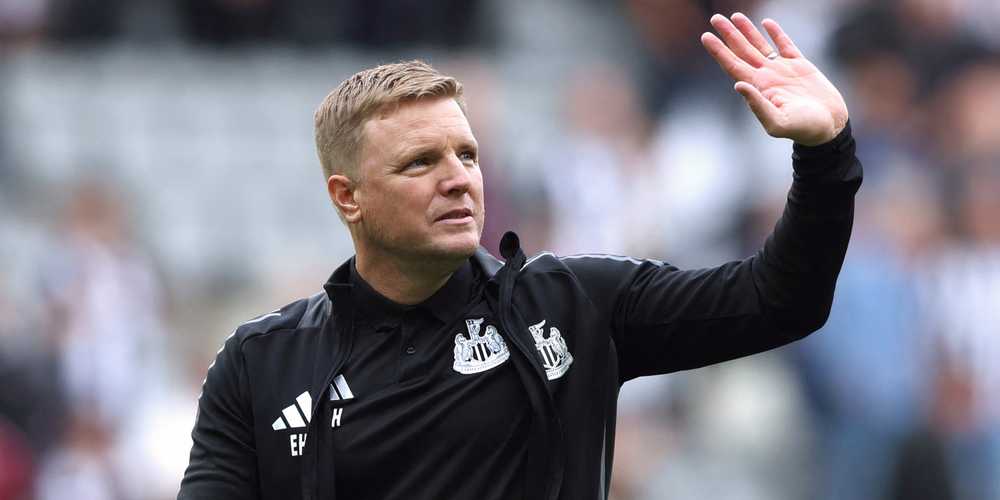
Updates Ranking on Every Premier League Manager by How Likely They Are to Be Sacked
As the Premier League season moves into its decisive stretch, the familiar churn of managerial speculation begins to gather pace once again. The closing months of the campaign are rarely just about players battling for points — they are also about coaches fighting to protect their reputations and, in many cases, their livelihoods. While a handful of clubs appear stable and well-structured behind the scenes, the ruthless nature of top-flight football means very few managers can truly relax.
The modern game is unforgiving. Results dictate everything, and patience is often in short supply. The dismissals of Ruben Amorim at Manchester United and Thomas Frank at Tottenham Hotspur serve as stark reminders that even highly regarded coaches are not immune when performances dip below expectations.
In this feature, we take a closer look at the fragile reality of Premier League management, evaluating how secure each manager’s position truly is. From those embroiled in relegation scraps to those chasing titles and European qualification, every dugout tells a different story. A range of factors come into play — league performance, progress in cup competitions such as the FA Cup, League Cup and Champions League, recent form, the ambitions of club hierarchies, fan sentiment, and the manager’s standing within the club’s history.
Some bosses are sitting comfortably, buoyed by strong results and long-term trust. Others, however, may feel the growing presence of potential successors lurking in the background.
20. Mikel Arteta – Arsenal
Last season’s finish: 2nd
For Arsenal and Mikel Arteta, the story has become one of near-misses. The Gunners once again finished runners-up last season, extending their wait for a first league crown since 2004. While it was not a flawless campaign, there were mitigating circumstances — injuries to key players such as Bukayo Saka and Kai Havertz disrupted momentum at crucial stages.
Even so, Arteta still had leaders to rely on, including Declan Rice, who continues to grow into a central figure at the Emirates. Though their domestic title push faltered, Arsenal impressed in Europe, reaching the Champions League semi-finals before bowing out to eventual winners Paris Saint-Germain.
After finishing second for a third consecutive year, frustration is understandable — especially with rivals lifting silverware in that time. Yet there remains widespread belief that Arteta is the right architect for long-term success. A flying start to the current campaign saw Arsenal top the table entering 2026, and although dropped points have tightened the race, they remain strong contenders for the title. For now, Arteta’s position appears stable — but sustained success is essential to silence the doubters permanently.
19. Régis Le Bris – Sunderland
Last season’s finish: Promoted (Championship)
The decision by Sunderland to appoint Régis Le Bris was bold, bordering on risky. With no prior managerial experience in English football, the Frenchman represented a leap of faith. However, that gamble has paid dividends.
Following promotion secured in dramatic fashion at Wembley, Sunderland have adapted impressively to life back in the Premier League. Le Bris has shown tactical intelligence and flexibility, blending youth with experience. Emerging talents like Chris Rigg and Jobe Bellingham have flourished, while the addition of seasoned campaigners has provided balance.
Of the promoted sides, Sunderland arguably look the best equipped for survival. Their mid-table position, comfortably clear of the relegation zone, suggests Le Bris is one of the safer managers in the division — at least for now.
18. Pep Guardiola – Manchester City
Last season’s finish: 3rd
There was a time when the notion of Pep Guardiola being under pressure at Manchester City would have seemed absurd. Yet football evolves quickly. Last season marked a rare dip, exacerbated by Rodri’s serious knee injury, which contributed to City surrendering their league dominance.
Speculation swirled about Guardiola’s future, but he silenced rumours by signing a contract extension until 2027. The club backed him heavily in the transfer market, signalling faith in a new era following the departure of long-serving stars.
City’s response has been promising. They remain firmly in contention domestically and have reached the latter stages of cup competitions. Still, whispers persist that Guardiola’s chapter in English football may be approaching its natural conclusion. For now, his legacy shields him — but even legends are judged by results.
17. Keith Andrews – Brentford
Last season’s finish: 10th
Replacing Thomas Frank was never going to be straightforward for Brentford. The appointment of Keith Andrews raised eyebrows, given his limited top-level managerial experience. However, the former set-piece specialist has made an encouraging start.
Despite losing key figures from last season’s squad, Brentford have remained competitive and even registered eye-catching wins against established heavyweights. The Bees are pushing for European qualification — an extraordinary achievement if sustained.
While challenges will inevitably arise, Andrews has thus far justified the club’s faith, easing fears that life after Frank would be turbulent.
16. Michael Carrick – Manchester United
Last season’s finish: 15th
Following Ruben Amorim’s departure, Manchester United turned to club legend Michael Carrick as an interim stabiliser. The former midfielder has brought calm and clarity, improving results and reconnecting with supporters.
Although United exited domestic cup competitions early, Carrick has steadied performances in the league and strung together an encouraging run of victories. His status within the club affords him goodwill, and early signs suggest he could be a serious candidate for the permanent role.
15. Unai Emery – Aston Villa
Last season’s finish: 6th
Aston Villa have rediscovered ambition under Unai Emery. The Spaniard has re-established himself in English football, guiding Villa back into Europe and nurturing an exciting attacking unit.
However, recent inconsistency has raised mild concerns. Cup exits and league defeats have dented momentum, and Villa’s early promise of mounting a title challenge has faded. Emery’s experience will be vital in preventing a complete slide, as expectations have undeniably risen.
14. Liam Rosenior – Chelsea
Midway through the campaign, Chelsea parted company with Enzo Maresca and appointed Liam Rosenior on a long-term deal. Though highly rated for his work abroad, Rosenior remains relatively inexperienced at the elite level.
Results have been mixed. Impressive victories have been offset by frustrating dropped points from winning positions — a recurring issue. The board’s long contract signals patience, but Chelsea’s demanding environment means sustained inconsistency could quickly alter perceptions.
13. Marco Silva – Fulham
Last season’s finish: 11th
At Fulham, Marco Silva continues to overachieve. Despite regular squad turnover, he has maintained stability and competitiveness, even guiding the club deep into domestic cup competition last term.
Supporters remain firmly behind him, and there is little indication that his role is under immediate threat. However, with his contract entering its final year, decisions about the long-term future must soon be addressed to avoid uncertainty.
12. Andoni Iraola – Bournemouth
Last season’s finish: 9th
Few managers have enhanced their reputation more rapidly than Andoni Iraola at AFC Bournemouth. Once a controversial appointment, he has transformed the Cherries into a fearless, high-intensity side capable of troubling elite opposition.
Even after losing key players to bigger clubs, Bournemouth remain competitive. Iraola’s greatest threat may not be dismissal — but rather being poached by a larger institution impressed by his tactical acumen.
11. David Moyes – Everton

Last season’s finish: 13th
The return of David Moyes to Everton has revitalised a club that endured turbulence. Following financial penalties and relegation fears, stability has returned.
Moyes has restored defensive resilience and ambition, with European qualification not entirely out of reach. Though recent form has wavered, there is renewed optimism at Goodison Park.
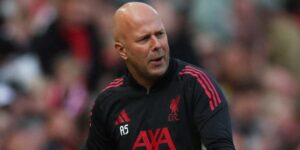
10. Arne Slot – Liverpool
Last season’s finish: 1st
At Liverpool, managerial patience is part of the culture. Arne Slot delivered the title last season, cementing early trust.
However, squad overhaul and integration challenges caused turbulence earlier in the campaign. While recent results have steadied nerves, failure to secure Champions League football would represent a significant setback.

9. Daniel Farke – Leeds United
Last season’s finish: Promoted (Championship)
Promotion brought joy for Leeds United, but also uncertainty regarding Daniel Farke’s long-term credentials. His previous relegations remain a concern.
Encouraging performances this season have eased pressure, yet survival remains the ultimate barometer. Continued resilience will determine whether Farke secures lasting backing.
8. Rob Edwards – Wolverhampton Wanderers
Last season’s finish: 16th
After a disastrous start under Vitor Pereira, Wolverhampton Wanderers turned to Rob Edwards. Though survival looks unlikely, signs of improved spirit have emerged.
The board appears willing to grant Edwards time, recognising the scale of the challenge inherited.

7. Igor Tudor – Tottenham Hotspur
Last season’s finish: 17th
Despite Europa League success, domestic struggles have plagued Tottenham Hotspur. Following Thomas Frank’s dismissal, Igor Tudor has stepped in on an interim basis.
Fan unrest is palpable, and Spurs hover dangerously close to the drop zone. Tudor’s task is immense: restore confidence, improve fitness levels, and deliver results swiftly to avoid catastrophe.
6. Vítor Pereira – Nottingham Forest
Last season’s finish: 7th
Few clubs change managers as frequently as Nottingham Forest. Now entrusted to Vítor Pereira, the objective is clear — halt the slide toward relegation.
With a talented squad but inconsistent form, Pereira faces significant pressure. Forest’s hierarchy is not known for patience, and survival will likely determine his fate.
5. Fabian Hürzeler – Brighton & Hove Albion
Last season’s finish: 8th
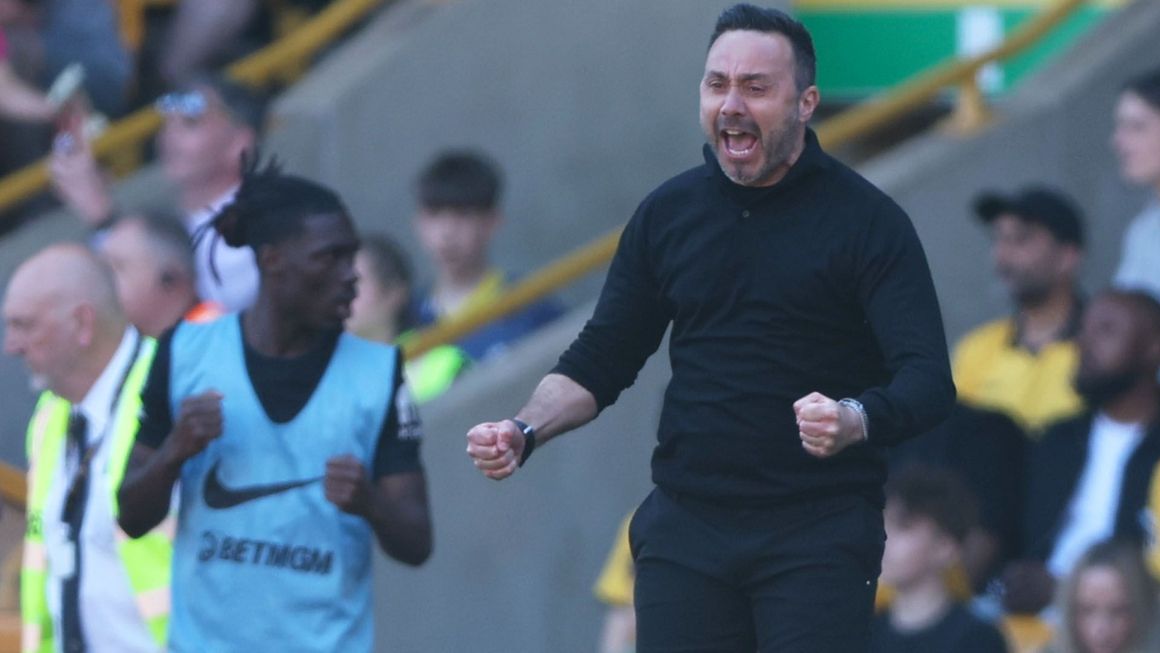
Replacing Roberto De Zerbi was a daunting task, yet Brighton & Hove Albion entrusted the role to Fabian Hürzeler. An eighth-place finish last term signalled promise, but recent struggles have dampened momentum.
A slide into mid-table obscurity has unsettled supporters. Hürzeler must arrest the decline quickly to preserve goodwill.
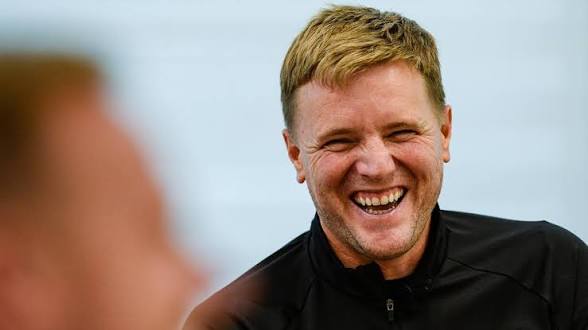
4. Eddie Howe – Newcastle United
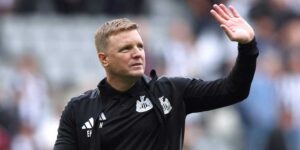
Last season’s finish: 5th
Newcastle United ended a 56-year trophy drought under Eddie Howe, securing the Carabao Cup and Champions League qualification.
Yet expectations on Tyneside are sky-high. Mixed results and inconsistent recruitment have sparked murmurs. Howe’s achievements grant him credit, but continued regression could test that loyalty.
3. Scott Parker – Burnley
Last season’s finish: Promoted (Championship)
Promotion always buys goodwill, but survival is the ultimate measure. Burnley boss Scott Parker faces a stern examination as his side battle to stay afloat.
Momentum can shift rapidly at the bottom of the table. Whether Parker cements his place or becomes the next casualty in this relentless managerial carousel remains to be seen.
As the campaign hurtles toward its conclusion, the only certainty is uncertainty. In the Premier League, reputations are built over years but can unravel in weeks. Some managers are writing legacies; others are simply fighting to survive another weekend.

2. Nuno Espirito Santo, West Ham United
Last season’s Premier League finish: 14th
Nuno Espirito Santo was the manager West Ham United turned to after sacking Graham Potter. The latter was axed on September 27 after only eight months in charge at the London Stadium. Has his successor had more luck in east London? Maybe a little.Now the Irons have some form, it’s imperative that they keep it going. Still inside the relegation places, it could only take a couple of losses to send them spiralling towards the drop, something which would undoubtedly lead to Nuno’s demise after being brushed aside by a Liverpool team that put five past them.
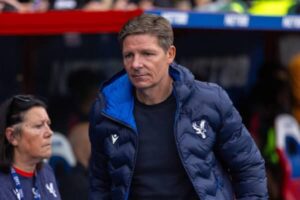
1. Oliver Glasner, Crystal Palace
Last season’s league finish: 12th
The biggest fairytale story of the 2024/25 campaign saw Oliver Glasner guide Crystal Palace to FA Cup glory and their first-ever major trophy. The former Eintracht Frankfurt man arrived with a good reputation, and his style of football has earned plaudits. It takes some serious steel – or, as they say, big cojones – to publicly warn Pep Guardiola that his system would be exposed unless he changed it. But Glasner didn’t just talk the talk after a 5-2 loss. He walked it all the way to Wembley and proved his point under the arches emphatically.
Glasner faced a difficult mission at the start of this season: keeping the good times rolling in South London without Eberechi Eze at the heart of their creative output. He managed to reach 19 games unbeaten following a 2-1 win over Liverpool, but that record came to a halt when they lost away at Everton soon after.
Now, the Eagles are in a rut, and Glasner has made no secret of his unhappiness at Selhurst Park, sensationally stating that he’ll be moving on at the end of the season before hitting out at supporters. It’s all getting a little too toxic at Selhurst Park, and Steve Parish could be pressured to make an early switch if things don’t improve, with former player Gareth Southgate rumoured to be weighed up as an interim option at one stage.






Post Comment