Tottenham Face A Serious Problem That Could Derail His Spurs Project
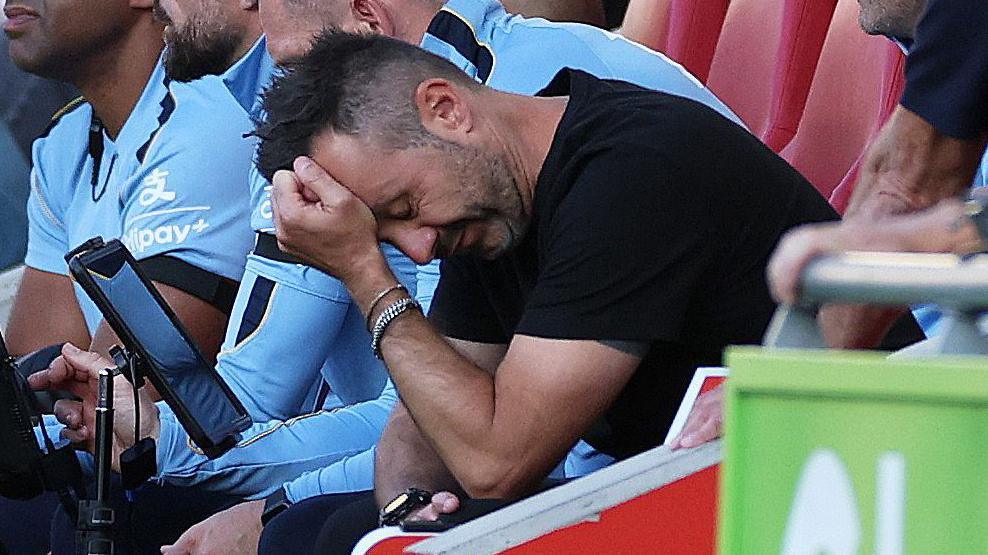
Tottenham Hotspur have been handed an early and painful reality check under Roberto De Zerbi, with their disappointing performance against Brentford raising serious questions about whether the club are truly ready for the ambitious new era they have promised their supporters.
The defeat was not simply a case of a new manager needing time to settle in. Tottenham were badly outplayed in important areas of the pitch, looked short of confidence and, most worryingly, lacked the intensity and determination expected from a team that has invested more than £300 million in reshaping its squad.
There are certainly understandable reasons for the poor performance. Spurs were missing several important players and were nowhere near their strongest starting XI. Micky van de Ven and Pedro Porro were unavailable, while Xavi Simons, Dejan Kulusevski, Mohammed Kudus and Wilson Odobert are also sidelined. Those absences significantly reduced De Zerbi’s options, particularly in attack and defence.
However, injuries can only explain so much. What was difficult to excuse was the lack of fight and organisation. Tottenham looked like a team still trying to understand the manager’s ideas, rather than a side that had already spent months preparing for the new season.
Brentford took full advantage.
The home side were aggressive, energetic and extremely effective in the central areas, where Tottenham were simply overwhelmed. That is particularly concerning for De Zerbi because his system depends heavily on controlling the middle of the pitch, building patiently from the back and creating passing options through narrow midfield positions.
Instead, Spurs repeatedly lost possession and struggled to escape Brentford’s pressure.
The midfield was arguably the biggest problem. Lucas Bergvall was given enormous responsibility in the absence of Mateus Fernandes, who was dealing with a calf issue and began the match on the bench. The young Swede struggled badly, especially defensively, and found himself unable to provide the control Tottenham desperately needed.
Gallagher also struggled to find a clear role, leaving the midfield three looking confused and disconnected. Brentford quickly recognised the weakness and repeatedly overloaded the middle, forcing Tottenham into mistakes.
De Zerbi eventually responded decisively, removing both Bergvall and Gallagher and bringing on Fernandes and Rodrigo Bentancur. The changes immediately improved Spurs’ control of possession, although by then much of the damage had already been done.
The situation also highlights how important the club’s summer recruitment was supposed to be. Tottenham have invested heavily because De Zerbi’s football requires players capable of handling pressure, moving the ball quickly and protecting the defence. The absence of a reliable midfield anchor was painfully obvious against Brentford.
That is why the decision not to secure certain permanent deals from the previous regime continues to look significant. Tottenham need a midfielder capable of providing stability when games become chaotic, rather than allowing the centre of the pitch to become an open invitation for opponents.
The defensive performance was equally worrying.
Marcos Senesi and Jan Paul van Hecke struggled to deal with Brentford’s movement and pressure, while Tottenham’s attempts to play out from the back frequently broke down. Brentford were able to win possession in dangerous positions and immediately attack the exposed defence.
One of the clearest examples came when Mamadou Sangare drove into the penalty area before creating the opportunity for Keane Lewis-Potter. Sangare’s performance was outstanding and showed exactly how badly Tottenham were missing control in midfield.
The goalkeeper situation will also attract plenty of attention. Antonin Kinsky endured a difficult evening and made errors that contributed to Brentford’s goals. There was already pressure surrounding his promotion to the No. 1 position following Guglielmo Vicario’s absence, and this performance will only increase the scrutiny.
Kinsky was unable to completely recover after making an error on Mathias Jensen’s effort, while another save from Sangare’s shot eventually fell kindly for Michael Kayode, who bundled home Brentford’s third goal.
The fact that Igor Thiago missed a penalty was almost the only piece of good fortune Tottenham received on an otherwise miserable night.
Still, it would be far too early to declare De Zerbi’s project a failure.
The Italian manager has inherited a squad undergoing significant changes, and injuries have made his job considerably more difficult. It is also understandable that a new team will require time to learn a completely different tactical system.
The bigger concern is that Tottenham appear further away from their ideal starting XI than many expected at this stage.
Archie Gray, for example, was forced to play at right-back and was even handed the captain’s armband despite being well down the pecking order when everyone is available. That says everything about the scale of Tottenham’s injury problems.
There were also some encouraging individual moments. Fernandes looked much more composed after coming on, while Andy Robertson produced an excellent defensive intervention to deny Dango Ouattara. Those moments suggest that Tottenham do have quality within the squad.
There is also hope that the attack will improve significantly once more players return. The expected arrival of Omar Marmoush from Manchester City could provide another dangerous attacking option, while Tottenham will also need their other creative players to return if De Zerbi’s system is to function as intended.
Savinho, meanwhile, has shown flashes of quality but still has areas of his game to improve, particularly when it comes to producing a consistent final ball and creating clear scoring opportunities.
For now, however, Tottenham cannot hide behind injuries, tactical adjustments or the fact that the season is only beginning.
The club have gone all in on this project. They have spent heavily, changed managers and promised supporters a fresh identity. That means expectations are naturally going to be high.
The jokes about Thomas Frank, the relegation chants and memories of Tottenham’s disappointing performances from the previous campaign quickly returned after the Brentford defeat. Supporters have seen too many false starts, too many rebuilding projects and too many promises of improvement.
De Zerbi now has the difficult task of convincing them that this time really is different.
He spoke before the match about restoring pride to Tottenham, and that is exactly what needs to happen. There is no reason for panic after one poor result, but the manner of the defeat cannot simply be ignored.
Tottenham looked vulnerable, disorganised and surprisingly easy to play against.
For a club that has invested so heavily and has ambitions of returning to the top end of English football, that is a serious warning sign.
De Zerbi deserves time to implement his ideas, especially with so many players unavailable. But Tottenham cannot afford to spend months making excuses. The performances must improve, the midfield must become more secure and the players must show considerably more character.
The Brentford defeat may eventually prove to be nothing more than an ugly early-season setback. But if Tottenham continue to look this fragile, the pressure on De Zerbi and the club’s recruitment strategy will become impossible to ignore.
Spurs have invested too much, promised too much and changed too much to simply repeat the mistakes of the past. The new era has only just begun, but the urgency to make it work is already very real.
