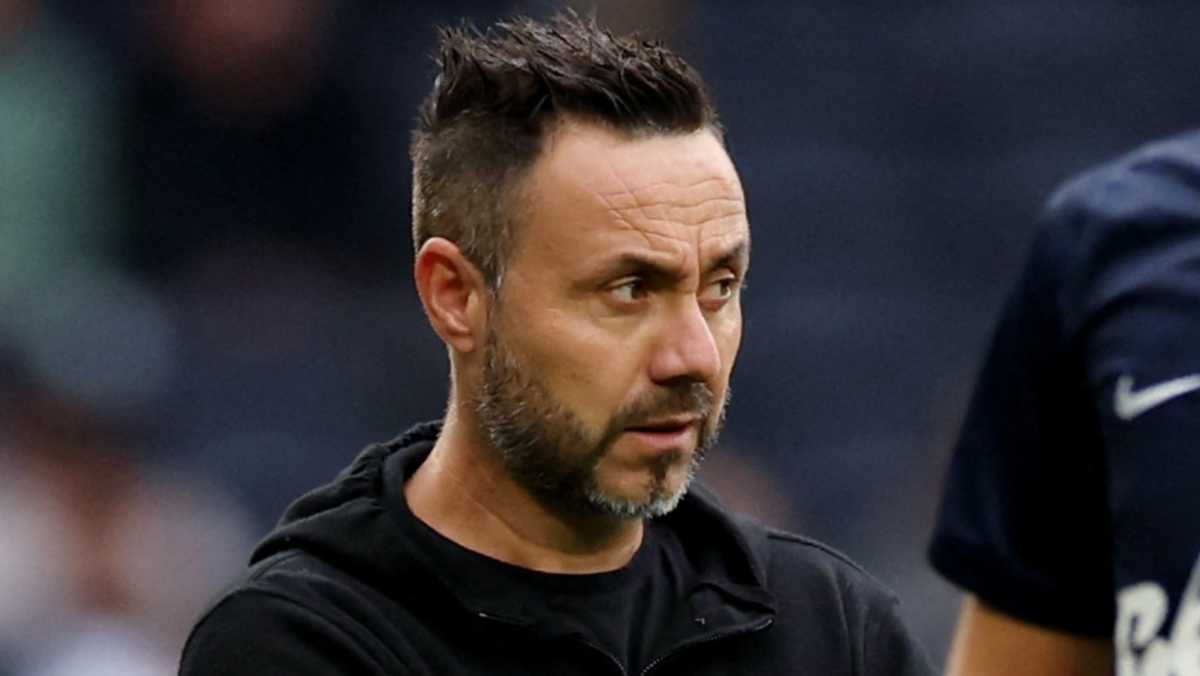
Roberto De Zerbi’s Tottenham project is already beginning to look like a nightmare, and with every disappointing performance, the Italian manager is finding it harder to explain why things are going so badly.
Tottenham finally ended their long wait for a Premier League goal on Saturday, but the relief lasted only a few minutes. Despite finally finding the net, Spurs suffered a damaging 3-1 home defeat to Aston Villa, another side that had also endured a difficult start to the campaign.
The result has raised even more questions about De Zerbi’s Tottenham revolution. After a summer in which the club invested more than £300 million on new players, expectations were naturally high. Supporters were promised a major rebuild designed to move Tottenham away from consecutive bottom-half finishes and back towards European football.
De Zerbi was also viewed as the ideal coach to lead that transformation.
The Italian manager has built his reputation around aggressive football, high intensity, bravery in possession and a willingness to take risks. Tottenham supporters expected to see those qualities immediately. Instead, the team currently looks short of confidence, intensity and, perhaps most worryingly, a clear identity.
The biggest problem is that it is becoming increasingly difficult to understand exactly what Tottenham are getting from De Zerbi.
There is nothing wrong with taking risks as a manager. In fact, De Zerbi’s tactical approach has always involved a certain degree of risk. But when a coach asks his players to operate in such a demanding system, there has to be a clear reward.
At Tottenham right now, that reward is difficult to see.
Spurs have struggled to create consistent attacking pressure, their performances have lacked the intensity many expected, and the team has repeatedly looked vulnerable when opponents apply pressure. The fact that Tottenham have now invested heavily in the squad makes the situation even more frustrating for supporters.
Of course, injuries have played a part. No team can operate at full strength throughout an entire season, and Tottenham have already had important players unavailable.
However, the injury situation cannot explain everything.
Compared with the problems Spurs experienced over the previous couple of seasons, the current situation is nowhere near as severe. De Zerbi still has plenty of quality players at his disposal, while the club also spent heavily to strengthen the squad during the summer.

That leaves the manager with fewer excuses.
Perhaps the most frustrating part is that De Zerbi already appeared to know what Tottenham needed.
At the end of last season, when Spurs were fighting desperately to stay away from relegation trouble, there were very few players who consistently demonstrated the mentality and character required to drag the team through difficult matches.
One of those players was Joao Palhinha.
The Portuguese midfielder became one of the few dependable figures in a hugely disappointing campaign. His performances were based on aggression, discipline, experience and a willingness to do the dirty work that many of his teammates struggled to provide.
De Zerbi recognised those qualities himself.
Speaking about Palhinha at the time, the Tottenham boss made it clear that he wanted the midfielder to remain at the club.
He said: “100 per cent [I want to keep him next season].”
De Zerbi then explained why Palhinha was so important to his plans.
“We have to start with [those] types of people. More than players, we need reliable people, reliable players. Palhinha is one of the best, as a player for sure, but as a guy.”
The manager also highlighted the midfielder’s mentality, adding that he wanted to see players displaying the same “passion”, “attitude”, “spirit” and “personality”.
Those words are particularly interesting when looking at Tottenham now.
If De Zerbi genuinely believed that Palhinha represented the type of character required to rebuild Spurs, then allowing the situation surrounding his future to become less important while pursuing other options is something that deserves scrutiny.
Tottenham had an option to sign Palhinha permanently for around £26 million.
In the context of a summer in which Spurs spent more than £300 million, that figure looks relatively small.
More importantly, Palhinha offered something Tottenham desperately needed.
He is an experienced defensive midfielder who understands how to protect a defence, break up opposition attacks and stop transitions before they become dangerous. He brings physicality, discipline and a competitive edge to midfield.
At 31, Palhinha obviously does not represent a long-term solution. He is also not the same type of player as Mateus Fernandes or Sandro Tonali. Both of those midfielders can offer more versatility and greater technical influence when everything clicks.
But that is not necessarily the point.
Tottenham did not simply need another talented midfielder.
They needed balance.
They needed someone capable of doing the ugly work that allows more creative players to flourish. They needed a midfielder who could recognise danger, make tactical fouls when necessary, win duels and give the defence protection.
Palhinha could provide precisely that.
Instead, Tottenham have invested heavily in other areas while the fundamental problems remain visible.
The defeat to Aston Villa highlighted those concerns once again. Spurs finally scored their first Premier League goal of the season, but rather than building on that breakthrough, they were ultimately beaten 3-1 on their own ground.
That is what makes the current situation so worrying.
It is not simply about one defeat or one poor performance. It is about the direction of the team.
Tottenham spent heavily because the club wanted immediate improvement. De Zerbi was brought in because the belief was that he could establish a demanding footballing identity and make Spurs competitive again.
But money alone does not guarantee progress.
New signings need to fit together. The manager needs to identify the right balance. Players need to understand their responsibilities, and the team needs a clear tactical identity.
At the moment, Tottenham appear to be struggling to put all of those pieces together.
The pressure will only increase if results continue to go against them.
De Zerbi still has time to turn things around, and it would be premature to judge an entire rebuild after only a handful of matches. However, the warning signs are already impossible to ignore.
The Italian was brought to Tottenham to change the mentality and intensity of the team. Yet those are precisely the qualities that appear to be missing most often.
And that leaves Spurs supporters asking a very uncomfortable question: after spending more than £300 million and giving De Zerbi the backing he wanted, why does Tottenham still look so far from the team they were promised?
The answer cannot simply be injuries, bad luck or the need for more time.
At some point, the performances have to improve.
For De Zerbi, that time may be arriving sooner than expected.
